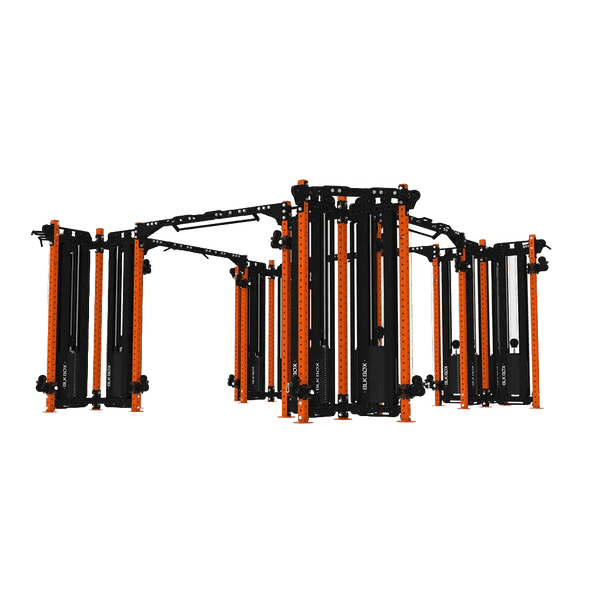
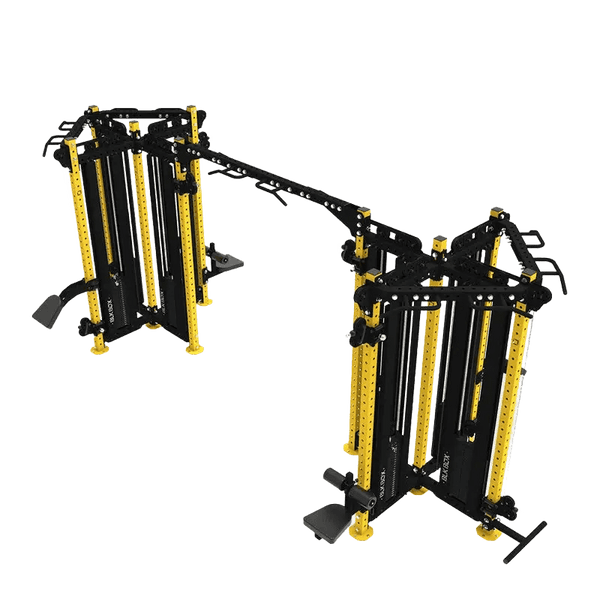
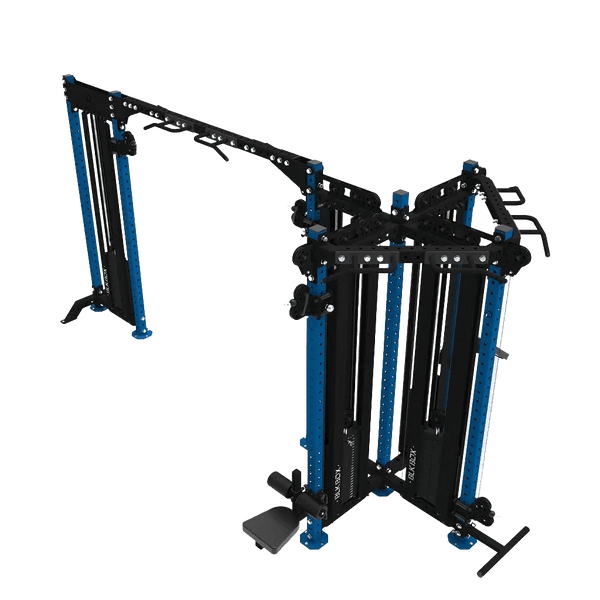
Cables machines are multifunctional pieces of gym equipment, that facilitate a range of exercises and applicable training options.
Gym Cable Machines for Strength Training
Cable machines are versatile equipment commonly found in gyms and fitness centres. They typically consist of pulleys, cables, and weight stacks that allow for various exercises targeting different muscle groups. Cable machines provide a wide range of resistance levels, making them suitable for beginners and advanced users alike, from chest presses to lat pulldowns.
Cable Machine Benefits for Strength and Muscle Growth
One of the main advantages of gym cable machines is the constant tension they provide throughout the exercise, which helps promote muscle growth and improve strength. Cable machines also allow for a greater range of motion compared to free weights, reducing the risk of injury while enabling functional movements that mimic daily activities. The versatility of these machines allows for cable attachments to enhance workouts further.
Types of Cable Machines: Crossovers and Lat Pulldowns
There are various types of cable machines available, each designed to target specific muscle groups and fitness goals, including cable crossover machines, lat pulldown machines, and tricep press machines. These come in different configurations and sizes to accommodate different workout spaces. Cable machines pair well with a wider strength machines setup for facilities building out a full machine-based training area.
Cable machines are strength systems using pulleys and adjustable cables to deliver constant resistance. They enable versatile, multi-directional training.
How do you use Cable Machines and what muscle groups do they train?
Use attachments like handles, ropes, or bars to perform exercises for chest, back, shoulders, arms and legs. Movements like rows, pulldowns and crossovers build strength across multiple muscle groups.
How to maintain Cable Machines?
Inspect cables and pulleys for wear, keep guide rails clean, and lubricate moving parts. Regular checks keep them running smoothly and safely.
What type of facility is a Cable Machine most suited for?
Perfect for commercial gyms, PT studios and home setups. Their versatility makes them a favourite for space-efficient strength areas.
How do I use this product safely?
Ensure attachments are secure, start light, and maintain control throughout each rep. Always refer to the safety guide.
What type of Cable Machine should I buy?
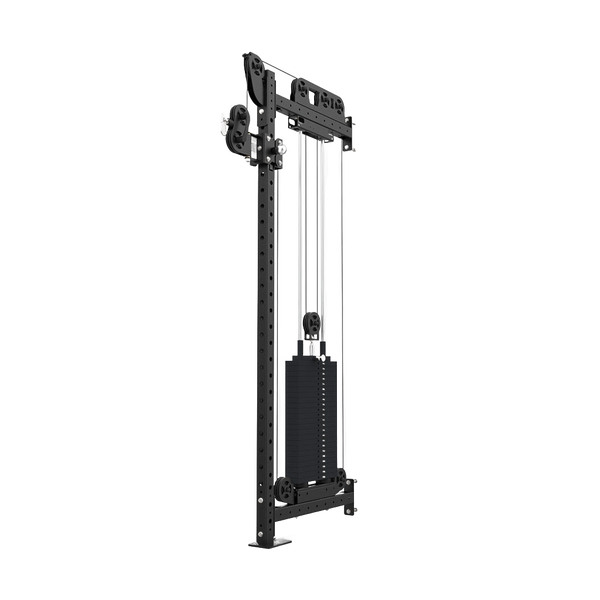
Dual adjustable pulleys offer the most flexibility. Functional columns are space-saving options, and integrated cable racks combine cable and barbell training in one unit.
What is Functional Training?
Functional training mimics everyday movements and enhances coordination and strength. Cable machines are excellent for this due to their unrestricted range of motion.
Which cable machine is right for my home gym?
For a home gym, choose between a standalone cable machine and a rack-integrated cable system based on space and how much free-weight training you want from the same footprint. A 1 Series Compact Rack with Cable Columns combines a squat rack, pull-up station and 120kg cable stack in a 1.2m x 0.8m footprint, while a standalone Dual Adjustable Pulley gives you two adjustable cable columns and a dedicated 1.1m x 1.8m cable station.
Should I choose a single cable column or a dual adjustable pulley?
Choose a single cable column when you want compact, unilateral cable work or to add cable resistance to an existing rack. Choose a Dual Adjustable Pulley when you want two independent adjustable columns for movements such as cable flyes, rows and bilateral work, with more dedicated cable-training space.
What does the pulley ratio mean for the resistance I feel?
The current BLK BOX cable systems use a 2:1 pulley ratio. On the Dual Adjustable Pulley, the selected stack weight is the stated working resistance for the machine, so use the resistance specification for the exact cable system rather than applying one generic pulley calculation across every model.
How much space do I need around a cable machine?
Start with the machine footprint, then allow clear working space for cable travel, handles and the exercises you plan to perform. The Dual Adjustable Pulley is 1.1m long x 1.8m wide and available at 2.2m or 2.4m high; the 1 Series Compact Rack with Cable Columns is 1.2m wide x 0.8m deep, also in 2.2m or 2.4m heights.
What is included in the cable machine price and what must I add?
Check the exact product configuration before ordering. Cable machines are sold as defined systems, while handles and specialist cable attachments are available separately. Rack-integrated systems may also need the compatible rack or upgrade kit if you do not already own the correct base unit.
Does this cable machine need to be bolted to a wall or floor?
Mounting requirements depend on the machine. The Dual Adjustable Pulley installation specification states that it bolts to the ground using M10 sleeve anchor bolts, while rack-integrated cable systems follow the installation requirements of the rack and cable kit. Check the install guide for the exact model before fitting.
Can I perform lat pulldowns and low rows on the same machine?
Yes, selected rack-integrated cable systems support both lat pulldowns and low-row style work when configured with the appropriate compatible attachments. The 1 Series Cable Column Kit explicitly supports lat pulldowns and cable work, while 3 and 5 Series have dedicated lat-pulldown and low-row attachment options.
Can the weight stack be upgraded if I need more resistance?
The standard stack on the 1 Series Cable Column Kit is 120kg, with a 150kg option available by enquiry. NEXUS systems also use 120kg stacks as standard with 150kg options on selected configurations, so specify the required resistance before ordering rather than assuming every machine is upgradeable after installation.
Will the pulley adjustment range suit users of different heights?
The Dual Adjustable Pulley has 23 height settings and 160° swivel handles, allowing the cable position to be adjusted for different users and exercises. For home or commercial use, check both the column adjustment range and the machine height against the users and movements you need to accommodate.
Can the machine be delivered through my doorway and assembled in the room?
Large cable machines can be delivered as components and assembled on site, but access should be checked before ordering. Confirm door widths, stairs, turns, ceiling height and final installation area against the packed or component dimensions, and use the installation guide for the exact machine.
How often do the cables and pulleys need inspection or servicing?
Inspect cables and pulleys regularly for wear, keep guide rails clean and lubricate moving parts. No single service interval is published, so inspection frequency should reflect usage and the condition found during checks.
Which cable machines are covered for daily commercial use?
For repeated commercial use, prioritise cable machines explicitly positioned for professional facilities. The Dual Adjustable Pulley is a dedicated commercial-style cable station, while NEXUS combines cable and free-weight training for PT studios, commercial facilities and elite performance spaces. The 1 Series cable systems are also suitable for home, PT studio and compact commercial environments.
 Up to 50% off EXTRA15