Rubber gym floor tiles from 7mm to 40mm for home gyms, functional areas and commercial free-weight and lifting zones.
Gym Floor Tiles for Home and Commercial Gyms
Rubber gym floor tiles, often called gym floor mats, protect the subfloor and your equipment from dropped weights, reduce noise and give a stable, non-slip training surface. Tiles are modular, so they can be cut to fit around walls and fixings, expanded as the space grows and replaced one at a time. The range runs from the 7mm Element Tile for functional and cardio areas to 40mm High Impact Gym Tiles for heavy lifting zones.
Gym Floor Tiles by Thickness and Use
7mm Element Tile for Functional and Cardio Areas
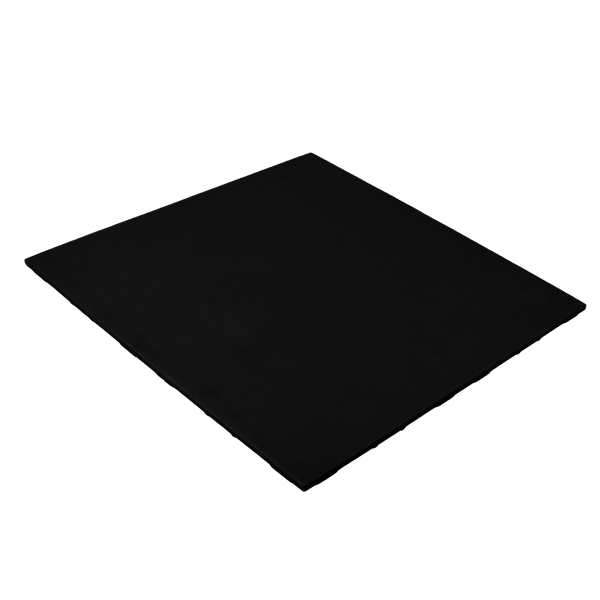
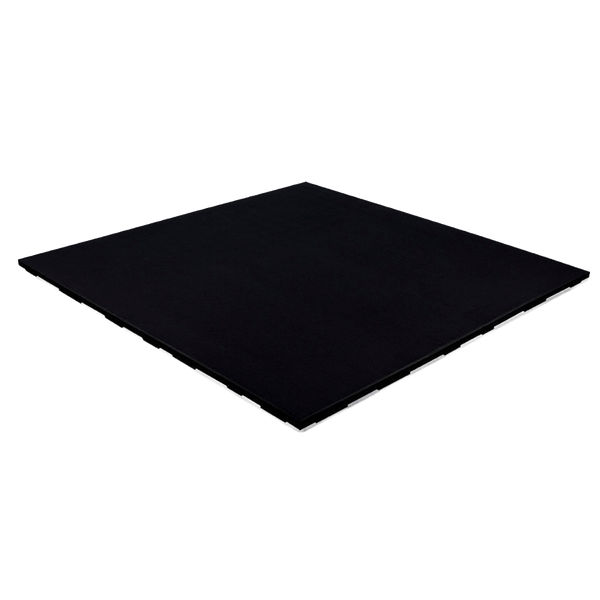
The Element Tile is a 1m x 1m, 7mm tile made in the EU from virgin rubber, with a high-grip, non-slip surface that works for barefoot and sock-based training. Its interlocking jigsaw edges need no adhesive, and it absorbs no water, which keeps it easy to clean in busy studios.
15mm Anti-Slip Gym Tile for Home Gyms
The 15mm Anti-Slip Gym Tile (1m x 1m, 15kg) is made for home gyms, PT studios and small-group training with light to moderate free weights, and can be lifted or moved without damaging the floor below.
20mm Challenger Gym Tile for Free-Weight Areas
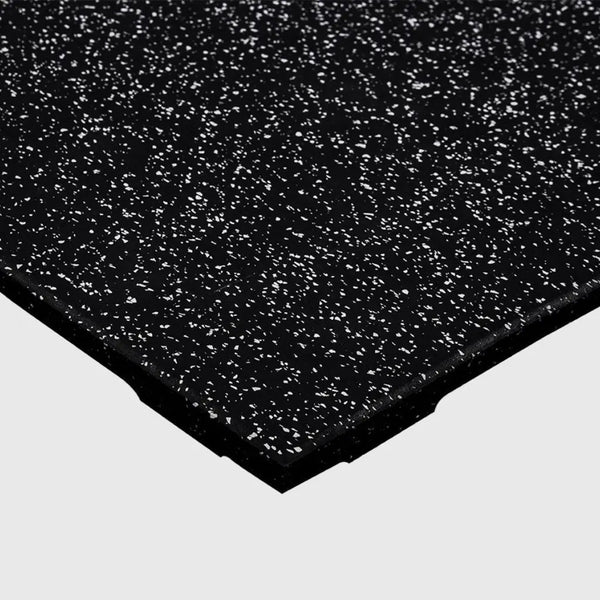
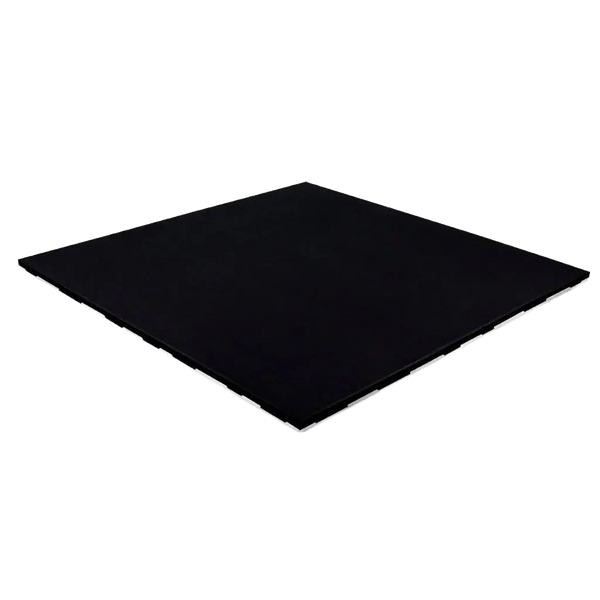
The 20mm Challenger Gym Tile (1m x 1m) is made in a single vulcanisation process, with a 5mm high-density SBR top layer over a 15mm recycled rubber base and an antistatic surface, for free-weight and Olympic lifting areas with high footfall. It comes in black, dark grey and light grey, and the current version is not compatible with Challenger tiles bought before April 2026. A 20mm High Impact Gym Tile is also available in eight colours.
30mm and 40mm High Impact Gym Tiles for Heavy Lifting
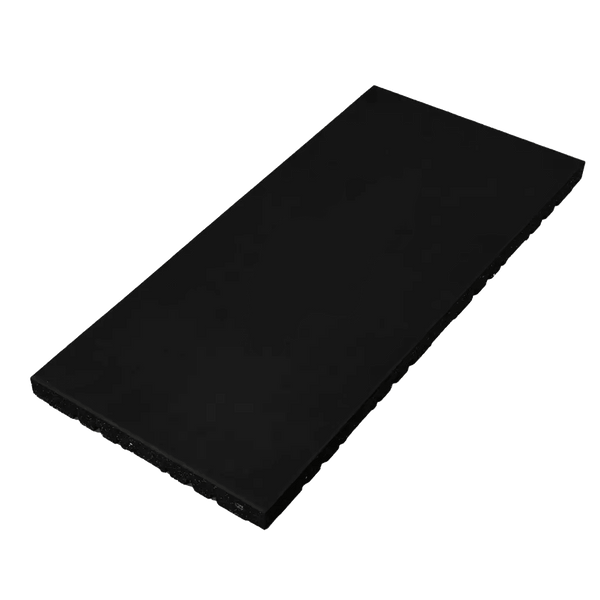
The 30mm High Impact Gym Tile (0.5m², 12kg) pairs a 5mm SBR top layer with a 25mm recycled rubber base. The 40mm High Impact Gym Tile (1m x 0.5m) bonds a 2.5mm EPDM top sheet to a 37.5mm recycled rubber base, and its product page lists 61% shock absorption (tested to EN14808) and 24dB sound reduction (certified to EN ISO 17025:2005), making these the tiles for dropped barbells and heavy dumbbell work.
Gym Floor Tiles vs Rubber Rolls
Tiles suit spaces where impact protection, easy replacement and a layout that can change matter most, and they can be laid without adhesive. Rolls give a seamless finish across larger areas but are fitted with adhesive on a prepared surface. For facilities with different flooring needs, browse our wider gym flooring range, including Foundation Roll for a seamless rolled surface, or turf and track flooring for sprint and sled work.
Installing and Cleaning Gym Floor Tiles
Challenger and 40mm High Impact tiles are joined with connectors, five per tile, and 30mm tiles with seven, giving near-invisible joins without adhesive; tiles can also be professionally bonded after subfloor preparation. Finish edges with transition strips and ramps that match the tile thickness: 20mm for Challenger and 40mm for High Impact. To keep tiles in good condition, vacuum and mop with warm water and a neutral-pH cleaner, and see our guide on how to clean rubber gym tiles.
Which cleaning products are suitable for the tile surface?
For the 40mm High Impact Tile, vacuum regularly and mop with warm water and a neutral-pH cleaner. Avoid solvent-based cleaners and machine cleaning. Cleaning requirements can differ between flooring surfaces, so use the care instructions for the exact tile selected, and see our guide on how to clean rubber gym tiles.
Which gym tile thickness suits my intended use?
Choose thickness from the training impact. Thinner tiles suit general gym use, while heavier free-weight and lifting areas need more protection and acoustic performance. The 40mm High Impact Tile, the thickest tile in the range, lists 61% shock absorption and 24dB sound reduction on its product page.
How many gym floor tiles do I need for my room?
Measure the net floor area in square metres, then divide by the coverage of the selected tile and add an allowance for cuts and waste. For layouts with walls, pillars or irregular edges, use the final floorplan rather than room length x width alone; the High Impact Tile calculator recommends at least 10% extra.
Can I lay these gym tiles over my existing floor?
It may be possible, but check that the existing floor is level, sound, dry and suitable for the selected fixing method. Heavy-duty flooring can only perform properly if the subfloor can support it and the edges or transitions are planned to avoid movement and trip points.
Do I need adhesive, ramps or edge pieces?
It depends on the tile. The 40mm High Impact Tile can use connectors, with five recommended per tile, and the 30mm High Impact Tile seven, or tiles can be professionally bonded to a prepared subfloor. Threshold ramps and transition strips may also be needed where the tile meets a lower floor surface.
Are the tiles sold individually or in packs?
Sale format is product-specific. Check whether the price is per tile, pack or square metre and use the tile dimensions to calculate actual coverage; for example, the black 40mm High Impact Tile is priced and sold per square metre. Do not infer the number of physical tiles from the collection price alone.
How should I plan cuts around pillars and room edges?
Plan full tiles through the main training area first, then place cuts against walls, pillars and edges where possible. Include at least the recommended waste allowance and keep the final row wide enough to remain stable rather than creating narrow slivers around the perimeter.
Which ramp or edging pieces match the tile thickness?
Match the ramp or transition strip to the tile thickness. For example, the Challenger transition strip is 20mm high and is intended for a 20mm flooring transition, while the High Impact Gym Tile Transition Strip is 40mm high, so do not use a 20mm edge piece against a 40mm tile without a designed level change.
Can I buy matching replacement tiles later?
Replacement is possible where the same tile remains available, but colour and production batches can vary over time. The current Challenger Gym Tile is not compatible with Challenger tiles bought before April 2026, so check compatibility before extending an existing floor. Keep the exact product name, thickness and colour specification, and consider retaining spare tiles from the original installation for high-wear areas.
What guidance applies to heavy racks and machines placed on these tiles?
Place heavy racks and machines on flooring that is specified for the expected static and impact loads, and follow the equipment anchoring instructions through or around the flooring where required. Do not rely on the tile itself as an anchoring substrate.
How much does each tile weigh and how is the order delivered?
Tile weight and shipping depend on the product and quantity; for example, the 15mm Anti-Slip Gym Tile weighs 15kg and the 30mm High Impact Tile 12kg. Expect larger flooring orders to arrive as a heavy palletised consignment, and plan delivery access and manual handling before installation day.
What is the complete cost per square metre including necessary fitting materials?
Calculate the complete square-metre cost from the tiles plus the specific connectors or adhesive, transition pieces, waste allowance, delivery and any professional installation or subfloor preparation. The displayed tile price alone is not the complete installed-floor cost.
How does flooring contribute to gym safety?
The right flooring enhances safety by:
Providing a stable, non-slip surface to reduce injury risk.
Absorbing impact to protect joints and muscles during training.
Shielding equipment and subfloors from heavy weight drops.
 BLK November - 20% off
 BLK November - 20% off
 BLK November - 20% off
 Sold out
 BLK November - 38% off
 BLK November - 20% off
 BLK November - 20% off


