Free weights and strength training equipment for home and commercial gyms, from dumbbells, kettlebells and barbells to strongman kit.
Free Weights and Strength Training Equipment
Free weights are any load you lift without a machine guiding the movement: dumbbells, kettlebells, barbells and weight plates. This range covers those core gym weights alongside weight benches, strongman equipment and lifting accessories such as belts, wrist wraps, knee sleeves and grips, for home gyms and commercial facilities alike. BLK BOX designs and manufactures strength equipment used by athletes, coaches and gyms across the UK and beyond.
Free Weights vs Machines
Free weights and machines suit different jobs. Because nothing guides the load, free weights make your body control the weight through space, which suits compound lifts such as squats, deadlifts, presses and rows, and develops strength and coordination. Machines and cables provide a fixed path and consistent resistance, which suits isolation and controlled accessory work. Most effective programmes use both.
Dumbbells and Kettlebells for Strength Training
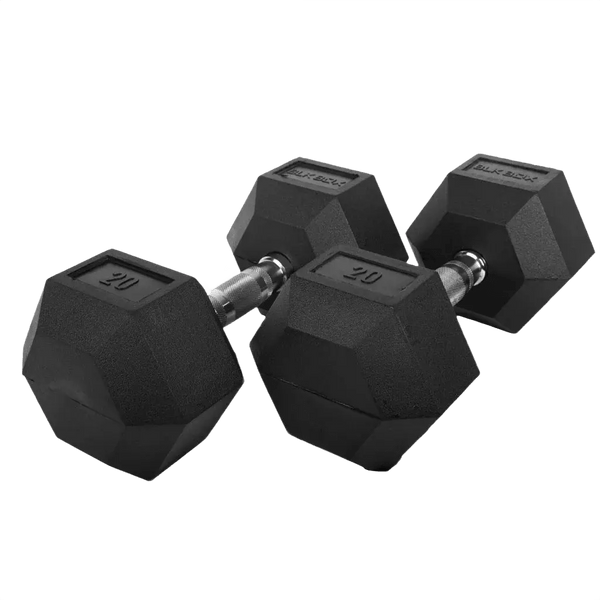
Our dumbbells are an essential for any setup, ideal for strength circuits and full-body workouts across all training levels, with rubber hex and urethane options. Add Kettlebells for dynamic movements like swings, cleans and Turkish get-ups: cast iron kettlebells suit general strength and conditioning, while competition kettlebells keep the same size from 8kg to 40kg with a 33mm handle. For a structured session, see our full-body dumbbell workout.
Fixed and Adjustable Dumbbells
Fixed dumbbells are quick to pick up between sets and suit shared or busy training areas. Adjustable dumbbells such as the PowerBlock Pro EXP replace a full rack in a compact footprint, expanding in stages up to 100lb with 2.5lb to 5lb increments, which suits home gyms where space is limited.
Olympic Barbells, Weight Plates and Weight Benches
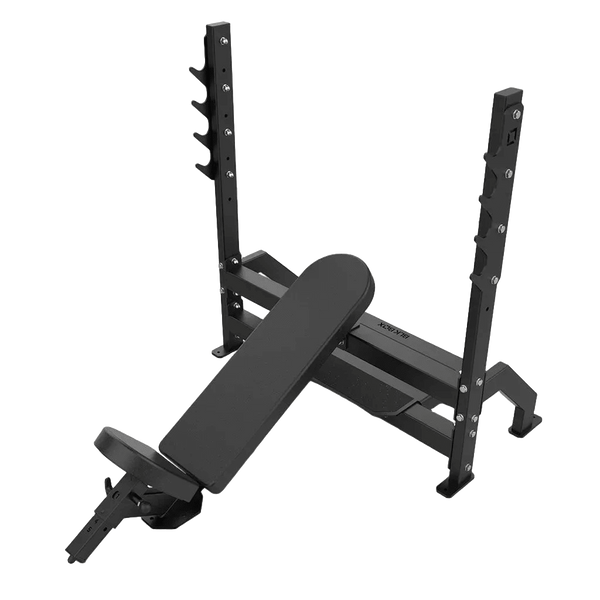
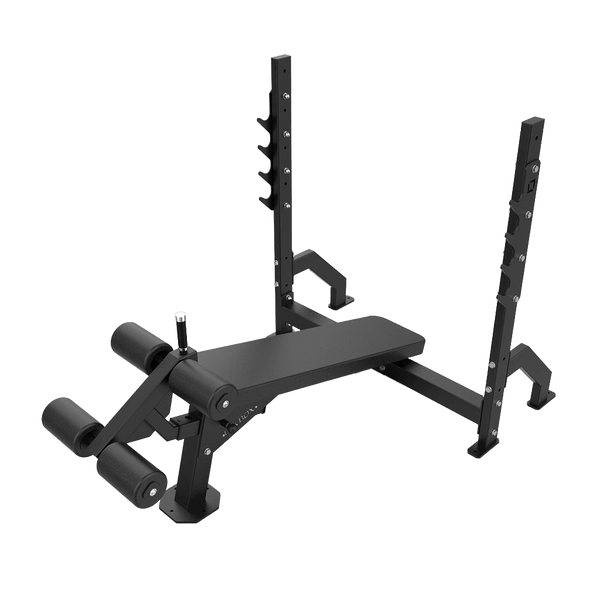
To complete a strength training setup, pair Olympic barbells with weight plates for squats, deadlifts and presses, add weight benches for flat and incline pressing, and use power racks for safe barbell work under heavy loads. The range covers compact home setups through to commercial facilities.
Strongman Equipment
Strongman training develops full-body strength, grip and conditioning through carries and loaded movements. The Strongman Yoke has a plate-loadable base, an adjustable crossbar and an integrated pull-up bar, and works with 3 Series J-Hooks. Farmer Walk Handles use vertical loading pins, Micro Farmer Walk Handles take up to two 25kg bumper plates each in a compact design, and Strongman Sandbags come in 10kg steps from 20kg to 100kg.
Pair free weights with suitable storage and flooring to keep the training area clear and protect the floor under heavy lifts.
Choose by movement rather than a single number. Swings and deadlifts are driven by the hips, so most people can use a heavier kettlebell for them than for presses, snatches or Turkish get-ups, which rely more on the shoulders and technique. Pick a weight you can control for every rep of your planned sets, then progress. BLK BOX cast iron kettlebells run from 4kg to 40kg, and the Premium Cast Iron and dual-marked Competition Kettlebells add 2kg steps between 4kg and 16kg, so lighter progressions do not have to jump a full 4kg at a time. Competition Kettlebells keep the same size at every weight, which keeps technique consistent as the load increases.
What size dumbbells should I buy?
Base the range on the exercises you plan to do. Lateral raises and other isolation work need light dumbbells, while rows, presses and Romanian deadlifts need noticeably heavier pairs, so a home setup usually covers a spread of weights rather than one pair. Choose loads you can control for the full set and leave room to progress. BLK BOX Rubber Hex Dumbbells run from 2.5kg to 60kg in 2.5kg steps, 12 Sided Urethane Dumbbells from 1kg to 60kg, and dumbbell sets are available in ranges such as 2.5kg to 30kg, 40kg or 50kg. Where space is limited, PowerBlock Pro EXP adjustable dumbbells replace a full rack, expanding from 5lb to 100lb per hand.
Should I start with dumbbells, kettlebells or a barbell setup?
Choose the tool that matches the movements you train most. Dumbbells give broad exercise variety with simple setup, kettlebells suit swings, carries and technical ballistic work, while a barbell setup gives the clearest route to heavier progressive loading. Many strength spaces use all three over time rather than treating them as direct substitutes.
What equipment do I need for strength training?
A complete strength setup normally combines a primary resistance system with supporting free weights. For barbell-based training that means a rack, bench, Olympic bar and plates; dumbbells and kettlebells add unilateral and accessory work, while cable or plate-loaded machines can fill specific movement gaps.
How can I build a strength equipment list for a small studio?
For a small studio, prioritise equipment that serves several clients and movement patterns from a compact footprint: a rack or NEXUS system, adjustable bench, dumbbells or kettlebells, Olympic bar and plates, plus modular storage. Add specialist machines only where the coaching programme needs them.
Which equipment supports the exercises in my training programme?
Map the programme by movement: squat, hinge, horizontal press and pull, vertical press and pull, carry and accessory work. Then select equipment that covers those movements without unnecessary duplication, using attachments or cable systems to fill gaps before adding another large standalone station.
Which equipment supports both lower-body and upper-body strength work?
A rack, barbell and adjustable bench cover major upper- and lower-body strength movements, while dumbbells, kettlebells and cable attachments extend unilateral and accessory work. If one footprint needs to cover both, a NEXUS rack combines barbell, pull-up and cable training.
What is a practical strength setup when I cannot fit a full rack?
If a full rack will not fit, consider a squat stand, folding rack, compact rack or a rack-and-cable system with a shallow footprint. The best option is the smallest setup that still gives safe bar support, the required exercise range and enough surrounding working space.
Which equipment can accommodate heavier loads as my training develops?
Barbells and plate-loaded systems offer a straightforward route to heavier loading by adding Olympic plates, while selectorised cable stacks and heavier dumbbell or kettlebell pairs add progression in fixed increments. Choose the progression method that matches the exercises and users you expect over the next few years.
What accessories do I need alongside a barbell and plates?
Alongside a barbell and plates, plan for a stable rack or squat stand, compatible J-Hooks, appropriate safeties and collars. Add a bench for pressing and storage for plates and bars so the working area remains clear.
Which purchases should I prioritise for a limited strength-training budget?
With a limited budget, cover the largest number of movements first: rack or stands, bar and plates, then a bench. Add free weights, storage and cable or machine options once the core strength movements are covered and you know where the programme still has gaps.
How should I choose equipment when clients train at the same time?
For simultaneous client training, duplicate the stations that create waiting time. A group programme where everyone squats together needs more rack stations; a circuit can use fewer duplicate stations because clients rotate. Plan equipment quantity from session format rather than total membership.
What storage should I include with a free-weight equipment order?
Include storage for the free weights you are actually buying: barbell holders, plate pegs or trees, dumbbell shelving and kettlebell shelves. Modular Basecamp storage can combine several equipment types and expand as the studio grows.
Which products are suitable and warranted for a commercial training space?
Use the suitability information on the exact product rather than assuming every item has the same commercial rating. 3 Series is aimed at commercial gyms, PT studios and group-training environments, 5 Series at elite high-performance facilities, and selected 1 Series products are suitable for PT studios and compact commercial spaces. General BLK BOX warranty terms still apply subject to product-specific conditions.
What types of dumbbells does BLK BOX offer?
We offer Rubber Hex Dumbbells, Urethane Dumbbells, and Adjustable Dumbbells, each designed for performance, durability, and grip security.
What is the difference between kettlebells and dumbbells?
The main differences between a kettlebell and a dumbbell are related to their shape, grip, and the type of exercises they are best suited for.
In short, if you're looking for a tool that allows for dynamic, full-body movements and builds both strength and endurance, a kettlebell is a great choice. If you prefer more controlled, targeted strength training for individual muscles, dumbbells are ideal.
 BLK November - 20% off

 BLK November - 20% off Sold out
 BLK November - 20% off Sold out
 BLK November - 20% off Sold out
 BLK November - 20% off
 BLK November - 20% off Sold out
 BLK November - 20% off
 BLK November - 20% off
 BLK November - 20% off
 BLK November - 20% off Sold out
 BLK November - 20% off Sold out
 BLK November - 68% off
 BLK November - 20% off
 BLK November - 20% off
 BLK November - 20% off


