Cast iron, competition and urethane kettlebells for home and commercial gyms, from 4kg to 40kg.
Kettlebells for Home and Commercial Gyms
Kettlebells combine strength, power and conditioning in one tool, covering swings, cleans, presses, carries and goblet squats from a small footprint. The BLK BOX range runs from 4kg to 40kg across cast iron, competition and urethane kettlebells, for home gyms, PT studios and commercial facilities.
Cast Iron, Competition and Urethane Kettlebells
Our range offers options to suit different needs:
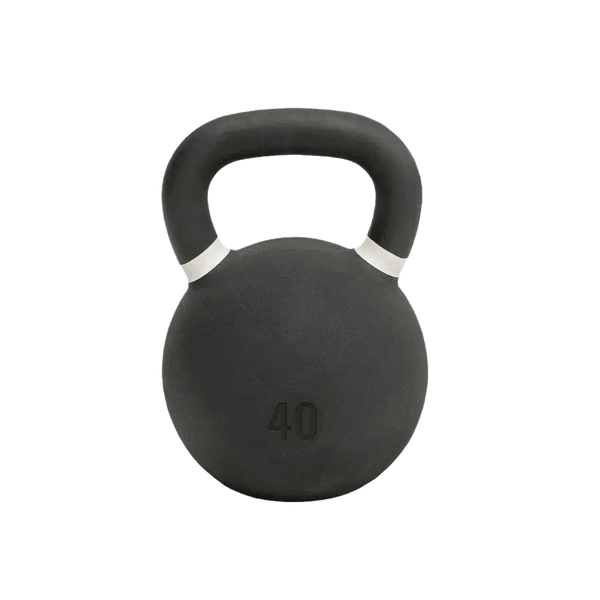
Cast-Iron – solid iron bells for swings, goblet squats and general strength training, in 4kg steps from 4kg to 40kg with colour-coded handles, plus dual-marked bells in 2kg steps from 4kg to 16kg.
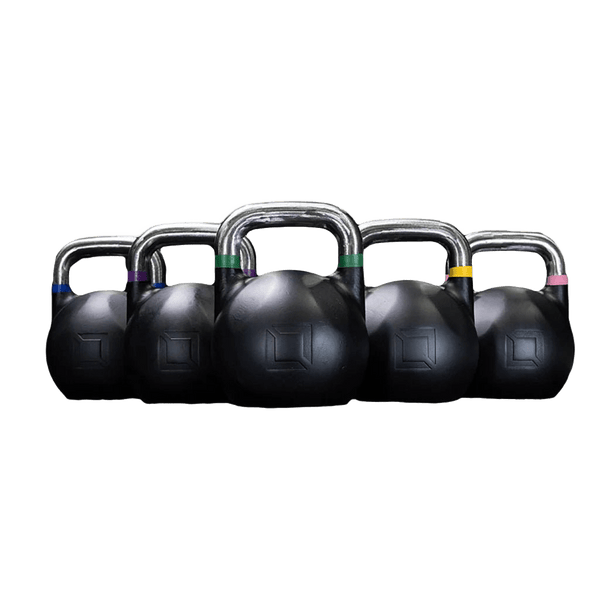
Competition – steel bells with the same 280mm height and 33mm handle at every weight from 8kg to 40kg, so technique stays consistent for snatches, jerks and carries.
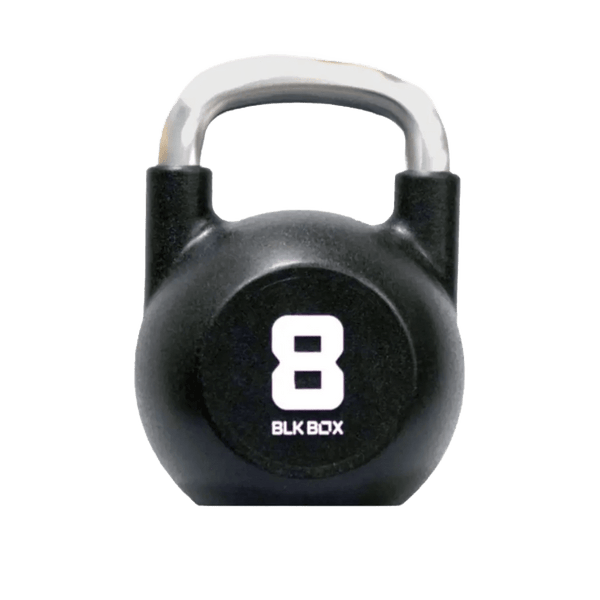
Urethane – a standard body size with brushed chrome steel handles and a urethane coating that resists wear, cracking and fading, from 8kg to 32kg across the urethane ranges.
Kettlebell Exercises
These kettlebells allow a wide variety of movements to keep workouts engaging. You can perform swings, sumo squats, single-arm rows, reverse lunges, and more. As you progress, using this equipment also improves coordination and body awareness, making the kettlebells essential for full-body conditioning.
Choosing a Kettlebell Weight
Choose by movement rather than a single number: swings and deadlifts are driven by the hips and usually take a heavier bell than presses, snatches or Turkish get-ups. Use a weight you can control for every rep with good form, then progress. Dual-marked bells with 2kg steps make lighter progressions smoother, and kettlebell sets such as the Cast Iron Kettlebell 4kg to 28kg Set cover a spread of weights in one order. For storage, 2-tier kettlebell racks come in 1.2m and 1.8m widths, including versions bundled with a kettlebell set.
Kettlebell Buying Guide
Not sure which one fits your needs? Explore our Buying Guide or read our Cast Iron vs Competition blog to learn more and find the perfect type for your training goals.
Choose by movement rather than a single number. Swings and deadlifts are driven by the hips, so most people can use a heavier kettlebell for them than for presses, snatches or Turkish get-ups, which rely more on the shoulders and technique. Pick a weight you can control for every rep of your planned sets, then progress. BLK BOX cast iron kettlebells run from 4kg to 40kg, and the Premium Cast Iron and dual-marked Competition Kettlebells add 2kg steps between 4kg and 16kg, so lighter progressions do not have to jump a full 4kg at a time. Competition Kettlebells keep the same size at every weight, which keeps technique consistent as the load increases.
Should I buy one kettlebell, a pair or a set?
Buy one kettlebell when the programme mainly uses unilateral or alternating work, a matched pair when you regularly train double-kettlebell lifts or carries, and a set when several weights are needed for progression or shared use. The best format follows the exercises and number of simultaneous users, not a fixed rule.
How do the available kettlebell styles differ?
Cast iron kettlebells are solid iron and increase in physical size as weight rises. Competition kettlebells are steel with the same body dimensions across the range and a 33mm handle, while urethane kettlebells also use a standardised body and handle profile with a protective urethane coating.
Which kettlebell should I buy for home training?
For general home strength training, cast iron kettlebells are the simplest value-focused option and their size increases with weight. Choose competition kettlebells when consistent dimensions and technical lifts matter, or urethane kettlebells when you want a consistent shape with a durable premium finish for home or commercial use.
Which storage rack fits my kettlebell collection?
Match the shelf to both the kettlebell style and quantity. A 1.2m Basecamp flat shelf can hold up to about five cast-iron or four competition kettlebells, while a 1.8m shelf can hold up to about eight cast-iron or seven competition kettlebells.
What handle diameter and internal handle width does each kettlebell have?
Competition Kettlebells use a 33mm handle diameter and list 120mm between the handles. Other kettlebell families use different geometry, so use the product-specific dimensions if handle clearance is important for two-handed work or storage.
Do the different weights have the same or different body dimensions?
Competition kettlebells use the same 280mm body height and standard dimensions across all available weights. Urethane kettlebells are also standardised across the range, while cast iron kettlebells increase in body size as the weight gets heavier.
What is the difference between the available coatings and finishes?
Cast iron kettlebells use an e-coat or textured powder-coat finish and change size with weight. Competition kettlebells use steel with a naturally brushed, rust- and scratch-resistant handle coating, while urethane kettlebells add a protective urethane body coating and chrome steel handles for a cleaner commercial finish.
Can I order two matching kettlebells for paired movements?
Yes. Order two of the same weight and kettlebell family when paired movements are part of the programme. Competition and urethane kettlebells are particularly useful for matched pairs because their dimensions remain consistent across the range.
Will the largest kettlebell fit the shelf depth of my storage rack?
Use the largest kettlebell dimensions when checking storage, not the lightest. Competition kettlebells are 280mm high and have uniform dimensions, while cast iron bells grow with weight, so storage fit can change as the collection becomes heavier.
What use and care requirements apply in a group-training studio?
In a group-training studio, keep kettlebells dry and organised, inspect handles and coatings for damage and provide enough weight options to reduce unnecessary sharing between active stations. Urethane and competition ranges give consistent handling for repeated technical work, while storage keeps the floor clear between sessions.
What is included in a kettlebell set and is each weight listed?
Set contents are product-specific. Check the selected kettlebell set or bundle for an itemised list of included weights before ordering, particularly if you need a continuous progression rather than a broad mixed set.
Are the heavier kettlebells subject to different delivery arrangements?
Heavier or multi-kettlebell orders may be split across parcels or sent on a pallet depending on the total shipment. Delivery charges and method are calculated from the order, so plan the receiving point for the complete weight rather than one kettlebell at a time.
What is the difference between kettlebells and dumbbells?
The main differences between a kettlebell and a dumbbell are related to their shape, grip, and the type of exercises they are best suited for.
In short, if you're looking for a tool that allows for dynamic, full-body movements and builds both strength and endurance, a kettlebell is a great choice. If you prefer more controlled, targeted strength training for individual muscles, dumbbells are ideal.
 Up to 33% off EXTRA15
 Competition-Ready
 Powder Coat for Superior Grip
 Cast Construction for Maximum Strength
 Colour Coded for Fast Selection
 Up to 37% off
 Built for Functional Strength
 Brushed Chrome Handle for Superior Grip & Durability
 Standardised Size for Consistent Technique Across All Weights

 Solid Cast Iron Construction
 Versatile for All Levels


 BLK BOX Quality

 Up to 39% off EXTRA15


