Squat racks, benches, barbells, free weights and flooring for home and garage gyms, from compact setups to dedicated training rooms.
Home Gym Equipment for Strength Training
A home gym lets you choose equipment around your own training and fit sessions around your schedule, with no waiting for a rack or bench. The range covers everything from a first set of dumbbells to a full garage gym, with compact options designed to make the most of every square metre.
What to Include in a Home Gym Setup
From kettlebells and dumbbells to squat racks, weight benches, barbells, weight plates and gym flooring, everything for a strength-focused home gym is in one place. BLK BOX designs and manufactures strength equipment for home and commercial facilities, with ranges that run from compact home setups to commercial performance facilities.
Dumbbells and Kettlebells for Full-Body Training
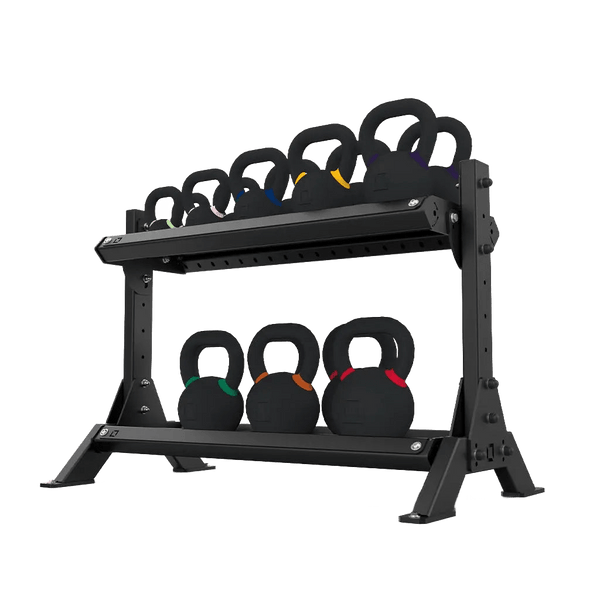
Dumbbells are an essential for any setup, ideal for strength circuits and full-body workouts. Cast Iron Kettlebells suit dynamic movements like swings, cleans and Turkish get-ups, which train grip strength, core stability and explosive power.
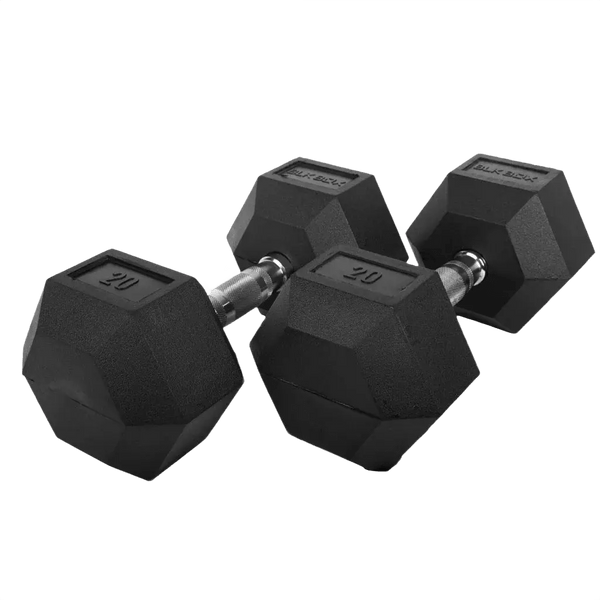
Rubber Hex Dumbbells combine rubber-encased heads with knurled handles for a secure grip. Their hexagonal shape helps prevent rolling between sets, making them a practical choice for pressing, rowing and strength circuits in a dedicated room or garage gym.
Barbells, Racks and Benches for Barbell Training
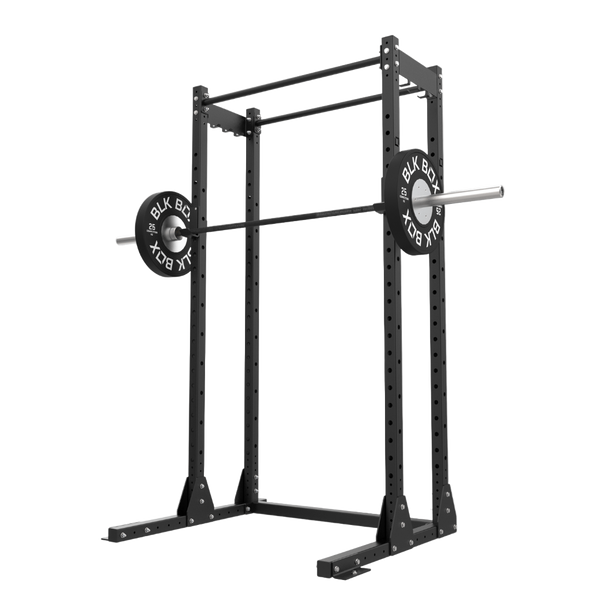
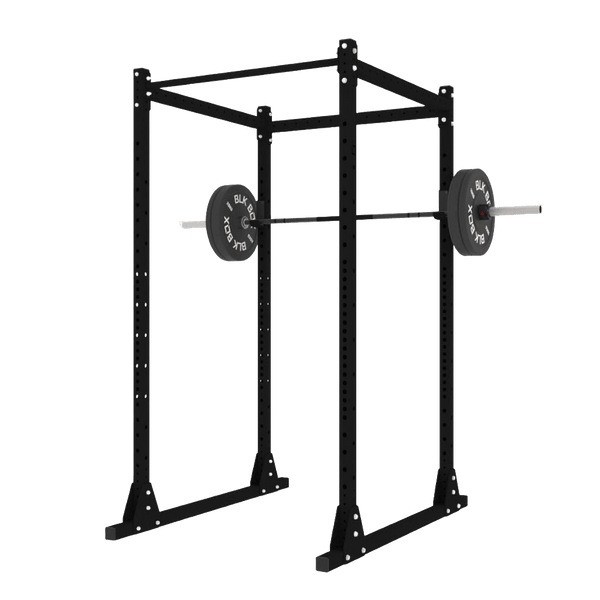
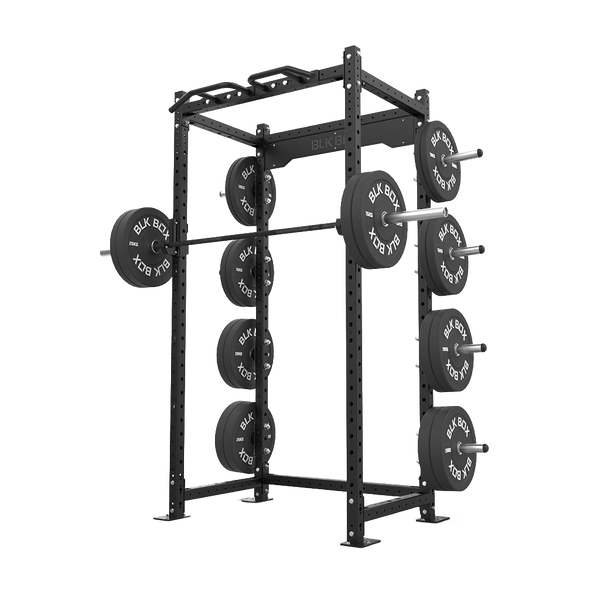
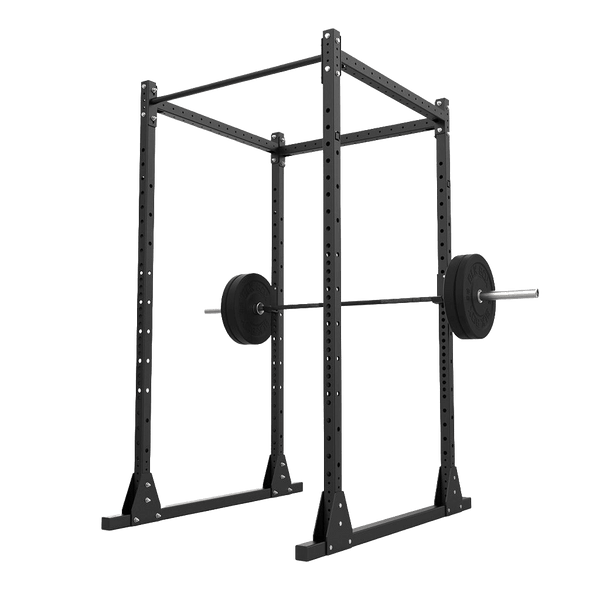
For barbell training, a complete home gym combines a weight bench for flat and incline pressing, a power rack for safe and versatile barbell work, and an Olympic barbell rated for heavy loads. Our guide on how to build your own home gym covers the planning in more detail.
Plan your home gym setup around the lifts you want to train, with room to position a bench and load your barbell. The Belfast Bar has sold over 120,000 units, and the 20kg version pairs a 28mm shaft with two needle bearings per sleeve for smooth sleeve rotation. Dual knurl markings provide reference points for both weightlifting and powerlifting grip positions.
Space-Saving Racks and Cable Stations for Garage Gyms
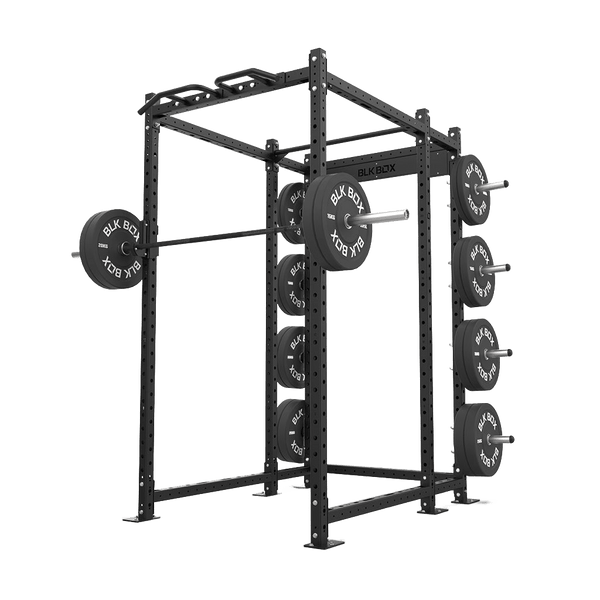
The 1 Series Folding Squat Rack folds against the wall between sessions, freeing floor space in a garage or shared training room. Its 60 x 60 x 3mm steel frame provides a dedicated barbell training station without permanently occupying the centre of the room. Installation requires a suitable solid wall.
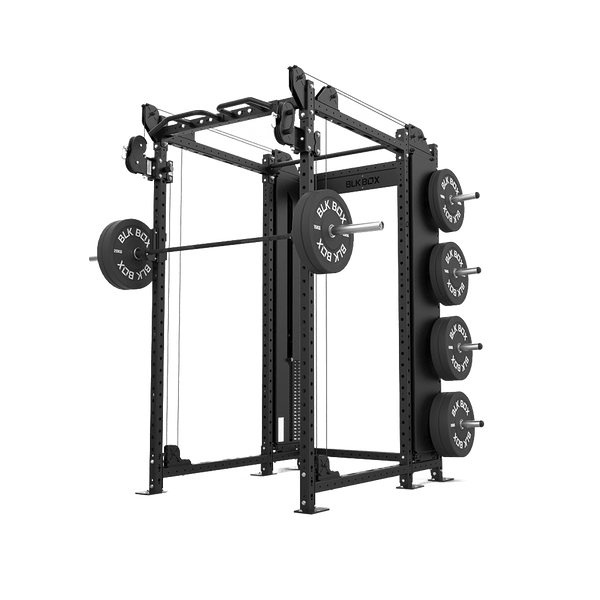
For barbell and cable training in one station, the 1 Series Compact Rack with Cable Columns combines a squat bay, pull-up station and two 120kg weight stacks with a 2:1 pulley ratio. Its frame measures 1.2m wide and 0.8m deep; allow additional space around it for your bench, barbell and movement during exercises. For two squat bays alongside the cable stacks, the 1 Series Full Rack with Cable Column is the step up, while the 1 Series Wall Mounted Cable Rack keeps cable training against the wall.
Adjustable Weight Benches for Flat and Incline Pressing
Choose an adjustable weight bench that suits your training and the space available. The 1 Series Adjustable Bench offers seven backrest angles and three seat positions. The 5 Series Adjustable Bench adds a wide base, a 49kg frame, an 800kg maximum capacity including the user, and a backrest that adjusts from flat to 90 degrees. Rear wheels and a front handle make it easier to reposition between exercises.
Home Gym Flooring and Storage
The Anti-Slip Gym Tile provides a rubber training surface in modular 1m x 1m tiles, each 15mm thick. Cover your training area and extend it as your setup grows. Wall Mounted Barbell Hangers and Fractional Plate Storage help keep bars and smaller plates organised, leaving more of the floor available for training.
From a compact garage setup to a dedicated training room, choose equipment around the lifts you train and the space you have, then add to it as your training develops.
A strength-focused home gym can be built around a rack or squat stand, weight bench, Olympic barbell, weight plates and suitable flooring, then expanded with dumbbells, kettlebells, cable training and storage. Choose the rack and floor first because they define the space available for everything else.
How much does a home gym cost?
Costs depend on how much equipment you need, but a core barbell setup is a useful benchmark. At current prices, a 1 Series Squat Stand, Utility Flat Weights Bench, Belfast Bar 20kg, 100kg Utility Bumper Plate set and four Anti-Slip Gym Tiles come to around £1,100, with free UK delivery on orders over £500. Swapping in an adjustable bench, a cable rack or more flooring raises the total, so plan the list around your training and check current prices before ordering.
What is the best flooring for a home gym?
For most home gyms, rubber tiles are the most practical choice because they protect the subfloor, reduce noise and can be extended as the space grows. The 15mm Anti-Slip Gym Tile suits home gyms and functional training areas, while the 20mm Challenger and 30mm High Impact tiles are designed for free-weight and lifting areas, with test data listing 61% shock absorption and 24dB sound reduction. If you regularly drop loaded barbells, use thicker high-impact tiles or a weightlifting platform in the lifting area.
What should I buy first for a strength-focused home gym?
For a strength-focused setup, prioritise a stable rack or squat stand, an Olympic barbell, plates and a bench. That combination covers squats, presses, pulls and barbell accessory work; dumbbells, kettlebells, cables and conditioning equipment can then be added around your programme and available space.
How do I choose home gym equipment for my available space?
Measure the usable floor area, ceiling height, door access and any garage-door or room obstructions before choosing equipment. In tighter spaces, consider a folding rack, 1 Series Compact Rack or a rack with integrated cable columns so one footprint covers more exercises.
Which equipment can I add later as my training develops?
Start with equipment that gives you a clear upgrade path. 1 Series racks accept attachments and selected cable-column upgrades, modular storage can expand as your weight collection grows, and free weights can be added in heavier increments without replacing the core setup.
How should I divide my home gym budget between equipment, flooring and storage?
Protect the parts of the budget that are difficult to change later: safe rack choice, suitable flooring and enough storage to keep the training area clear. Then allocate the remaining budget to the bar, plates and free weights that match your programme. Avoid spending on duplicate equipment before the core training movements are covered.
How can I check that the rack, bench, bar and plates work together?
Check the rack’s internal width and J-Hook position against the bar’s rackable length, use 50mm Olympic plates with an Olympic bar, and confirm the bench fits the rack depth and pressing position. Treat the rack, bench, bar and plates as one system rather than four separate purchases.
Which equipment choices should I consider for a low-ceiling room?
For a low ceiling, compare actual rack height and overhead movement clearance. 1 and 3 Series have 2.2m options, the Blackout Half Rack is 2.226m high, and compact or folding racks can reduce the amount of fixed structure in the room. Avoid choosing a pull-up station that leaves no usable head clearance.
What product information should I check when noise is a concern?
When noise is a concern, check flooring thickness, shock absorption and acoustic test data, then consider plate material and how equipment will be stored. The 30mm High Impact Tile lists 61% shock absorption and 24dB sound reduction, while rubber bumper plates are designed to absorb impact during lifting.
Which home gym equipment requires permanent fixings?
Permanent fixing depends on the product. Wall-mounted and folding racks need suitable wall fixing; 5 Series racks require bolting to the wall or ground; some self-stabilising freestanding racks such as the Blackout Half Rack can be used without floor bolts for normal training. Always follow the exact installation guide.
How can I check that large equipment will fit through my home's access route?
Measure the complete delivery route as well as the room: external doors, internal doors, stairs, corners and ceiling height. Flat-packed racks are easier to move through restricted access, while assembled cardio or heavy strength machines may need much wider access and a planned delivery route.
How can I choose equipment for more than one person in the household?
Choose adjustable or broadly usable equipment when several people share the home gym. An adjustable bench, rack with multiple J-Hook settings, a range of plate increments and cable columns with multiple height positions allow different users to train without duplicating the full setup.
Can I get help reviewing my home gym equipment list before ordering?
Yes. Use Add to Quote or the gym design service with your room dimensions, ceiling height, training goals and proposed equipment list. That allows the setup, access and compatibility to be reviewed before you commit to large home gym equipment.
What gym equipment works best in a small room?
Prioritise equipment that covers several exercises in a small footprint: a compact or folding squat rack, an adjustable bench, an Olympic barbell with plates, and adjustable or a short run of fixed dumbbells. Rubber flooring protects the floor, and wall-mounted storage keeps the space clear between sessions.

 Durable construction
 Performance ready
 Premium finish
 BLK BOX Quality
 48% off EXTRA15
 Rapid delivery
 Easy installation
 Lifetime structural warranty


 Bespoke design
 Secure storage
 Superior finish
 Precision Engineered

 Maximise Potential
 Functional Design


 Secure kettlebell storage
 Safe and durable


 Modular design
 Configurable shelves


 Enhanced Versatility


